

Christianity is a Pain
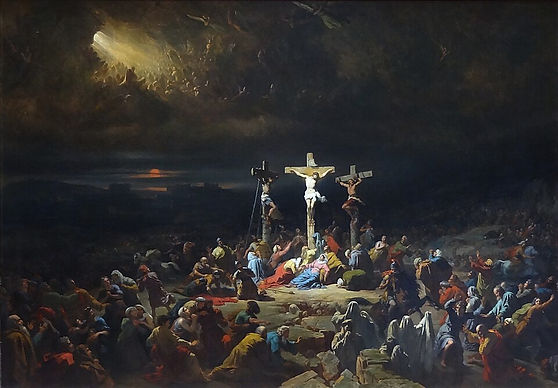
“The Son of God suffered unto the death, not that men might not suffer, but that their sufferings might be like His.”
--George MacDonald
Childhood is pretty good. That is, until that awful time comes when you have to leave behind your days of play and go to school. Then you’re trapped in what seem like endless years of rules, homework, other kids sizing you up by the clothes your parents could afford to dress you in, or being reduced to that one moment you disgraced yourself in gym class. But then you finally get through that and gain some independence by entering the workforce! But that pain is worse and more monotonous than school was! But, you know, you may meet someone you feel you can share your life with and get married. And that’s painful, too. But sometimes marriage leads to cute little babies in the house. That’s really painful; and the older those babies get, the more heartache they can cause, and the more difficult it is to resolve their pain, too.

“Life is pain, highness. Anyone who says differently is selling something.” Truer words have never been spoken in film. I have a distaste for those versions of the faith that appear to make the case that becoming a Christian means leaving pain and sorrow behind. Habits of sin can certainly make people miserable and can cause needless pain, but no one is guaranteed a pain-free life after choosing to walk in faith. Rather, we have a savior who will suffer alongside us. The reality of things is such that not even God gets out of this life without suffering, and servants are not greater than their master. I winced to hear someone at work tell me he had been fairly religious until he lost someone close to him, after which he “started questioning things.” Running toward God was exactly where he needed to go in that moment. If Christianity is sold as a kind of “life hack” that will keep us happy and out of suffering, it’s no wonder that people would leave it behind when things get difficult.

What makes Christianity stand out to me as a deeper truth than eastern religions like Buddhism (as far as I’ve come to understand them) is in the way it makes sense of suffering. Buddhism suggests to us that suffering comes from our attachments to things or pleasures in this world, which are all fleeting. Its goal is to escape suffering by detaching oneself from the world–even detaching from the concept of the self. I don’t want to be too unfair to Buddhist concepts in this glossing, because there is room in Buddhism for love and altruism, and the Christian faith also requires some detachment from temporal worldly things. And yet, what God promises to us is not merely to do away with suffering, but to utterly transform it. In the ancient Roman world, the cross was a symbol of oppression, torture, shame, and death. In the crucifixion of Christ, its meaning has become entirely inverted into one of sacrifice, love, and healing. This is true even in its secularized depictions on passing ambulances and Red Cross blood drives.
We have hints of this transfiguration of suffering, even in this life. A child sick at home with the flu may be in a miserable condition. But if that child has a mother who waits upon him and nurses him through it, it will make all the difference. To know love and care from a mother in that way is better than the temporary sickness is bad. Could the child have come to know the comfort and depth of that love without the pain of sickness? It doesn’t seem certain to me that he could have.
I’m thinking of my nephew and his wife, who welcomed their first child into their home this past weekend. Though I’ve witnessed a few childbirths in my time, I have not endured the labor of one. And so while I cannot speak first hand about that experience, the sense I get is that the significance of all those labor pains change the moment that each mother holds that baby in her arms for the first time. It is precisely to the pains of labor that Paul analogizes the present sufferings of this life in his epistle to the Romans:
“I consider that the sufferings of this present time are not worthy to be compared with the glory which shall be revealed in us. For the earnest expectation of the creation eagerly waits for the revealing of the sons of God. For the creation was subjected to futility, not willingly, but because of Him who subjected it in hope; because the creation itself also will be delivered from the bondage of corruption into the glorious liberty of the children of God. For we know that the whole creation groans and labors with birth pangs together until now. Not only that, but we also who have the firstfruits of the Spirit, even we ourselves groan within ourselves, eagerly waiting for the adoption, the redemption of our body. For we were saved in this hope, but hope that is seen is not hope; for why does one still hope for what he sees? But if we hope for what we do not see, we eagerly wait for it with perseverance.” (Ch. 8:18-25)
Christ invites his followers into his suffering by taking up his cross. This is not because he enjoys seeing us suffer, but because he invites us into the total inversion of their significance once having endured them. The only alternative to this is to allow our suffering to end in bitterness. The risen, glorified body of Christ retains the wounds it received in this earthly life, but they are now a proof and a promise for we who will not escape it alive, either. I am truly sorry for the man who told me he began to question his faith after his loss. What I would want him to know is that the depths of the pain we experience in the loss of loved ones in this life will be proportional to the heights of joy in the reunion to come, if we will only persevere.


Comments